
How Florida's 2025 Emergencies Law Sped Up Hotel Approval on Miami Beach
Highlights
- Florida Senate Bill (SB) 180, the 2025 emergencies law, created new, immediate limits on how local governments may regulate development and, in many cases, freezes "more restrictive or burdensome" local growth control measures through October 1, 2027.
- SB 180 adds a post‑landfall, one‑year restriction for "impacted" jurisdictions within 100 miles of a hurricane's track and a separate, retroactive freeze on stricter comprehensive plan and land development code changes statewide from August 1, 2024, through October 1, 2027 (due to 2024 disaster declarations).
- Residents, businesses – and, in some instances "any person" – may sue to enjoin noncompliant local government actions, with expedited relief and attorneys' fees available to prevailing challengers. A 14‑day "cure" window can trigger an immediate preliminary injunction if not met.
- SB 180 also revises Florida's emergency tolling statute, including retroactivity and explicit coverage for formal wetlands determinations.
Florida Senate Bill (SB) 180, the 2025 emergencies law, created new, immediate limits on how local governments may regulate development and, in many cases, freezes "more restrictive or burdensome" local growth control measures through October 1, 2027. SB 180 adds a post‑landfall, one‑year restriction for "impacted" jurisdictions within 100 miles of a hurricane's track and a separate, retroactive freeze on stricter comprehensive plan and land development code changes statewide from August 1, 2024, through October 1, 2027 – due to 2024 disaster declarations.
Residents, businesses and, in some instances "any person," may sue to enjoin noncompliant local government actions, with expedited relief and attorneys' fees available to prevailing challengers. A 14‑day "cure" window can trigger an immediate preliminary injunction if not met. SB 180 also revises Florida's emergency tolling statute (Section 252.363, Florida Statutes (2025)), including retroactivity and explicit coverage for formal wetlands determinations under Section 373.421, Florida Statutes (2025).
Litigation is already underway, with at least 25 cities and counties – including, but not limited to, the cities of Homestead and Fort Lauderdale, towns Cutler Bay and of Palm Beach, and Orange County – have filed suit to block the growth‑management restrictions, claiming it is unconstitutional and constitute an unfunded mandate.
Summary
SB 180 can both stabilize entitlement pathways and create new opportunities to challenge a local government's land use regulations that would otherwise add time, cost or discretionary risk to projects. Although SB 180 is an emergency‑management package, its most impactful provisions for land use and zoning are those that constrain a local government's ability to enact "more restrictive or burdensome" comprehensive plan, zoning code or procedural requirements.
Key Provisions Affecting Local Planning and Development
Prohibition on "More Restrictive" Land Use Regulations
Two overlapping regimes do most of the work. First, for one year after a hurricane's landfall, any "impacted local government" – county included in a federal disaster declaration that lies wholly or partly within 100 miles of the storm track and every municipality within such a county – may not impose moratoria on construction or adopt more restrictive comprehensive plan amendments or more burdensome review procedures. Second, and separately, SB 180 imposes a retroactive "freeze" on more restrictive or burdensome measures from August 1, 2024, through October 1, 2027. The freeze applies to every county listed in the Federal Disaster Declaration for Hurricanes Debby, Helene or Milton.1 These constraints apply to both substantive rules and procedures.
Emergency Tolling and Extensions (Including Wetlands Determinations)
Beyond preemption of new restrictive regulations, SB 180 expands Florida's emergency tolling framework. SB 180 revises Section 252.363, which tolls and extends a range of approvals – including development orders, building permits, environmental resource permits, developments of regional impact and development agreements. Now, it explicitly covers formal wetlands determinations under Section 373.421, with a specified retroactive application and a 90‑day, post‑emergency notice requirement to the issuing authority.
Miami Beach M Hotel Case Study
Below is a look at the site that would become the M Hotel and a rendering of current plans. Images courtesy of Architect Sylvia Pawlowski.
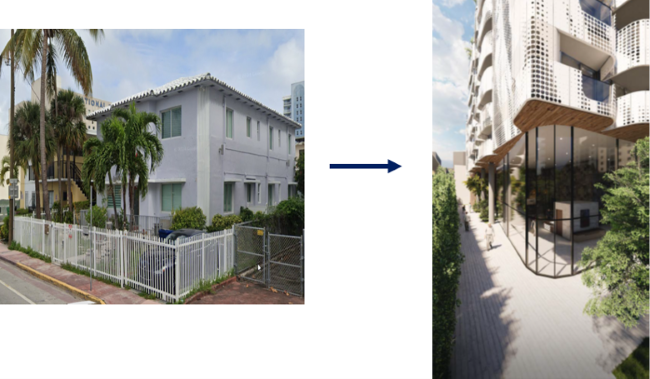
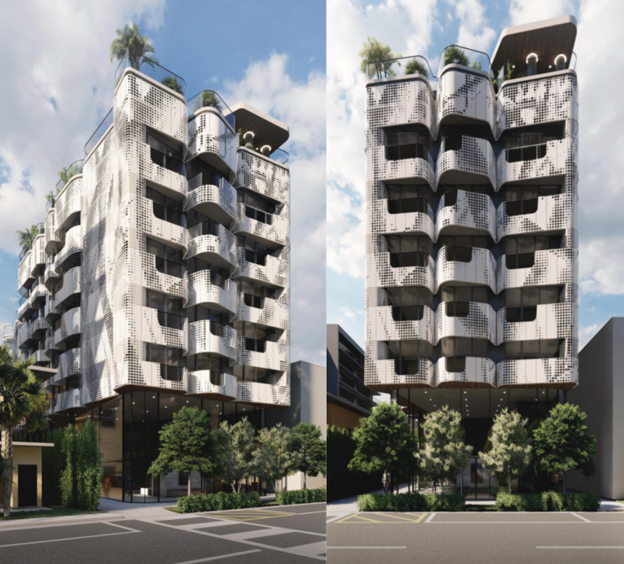
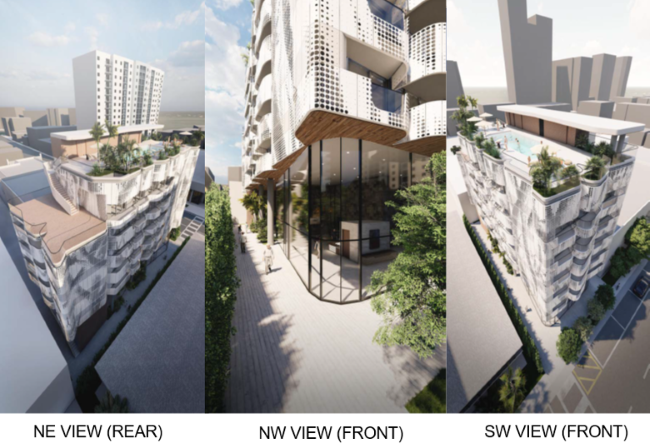
In February 2025, the City of Miami Beach adopted a new hotel approval process2 that added a City Commission-level approval layer for certain hotel projects. This created a new discretionary approval step – a "Commission Warrant for Hotel Use" – that a project with Holland & Knight client would otherwise have been required to obtain before proceeding.
The Holland & Knight team's strategy relied on a key provision of SB 180, the Retroactive Statewide Freeze. SB 180 imposes a retroactive freeze on more restrictive or burdensome measures from August 1, 2024, through October 1, 2027, applying to every county listed in the Federal Disaster Declarations for Hurricanes Debby, Helene or Milton, which include Miami-Dade County and, therefore, the City of Miami Beach. Any such moratorium or restrictive procedure is declared "null and void ab initio."
How the Bypass Worked
Because Miami Beach's hotel warrant ordinance was adopted after July 31, 2024, and constituted a "more burdensome" procedural requirement than the prior baseline, SB 180 rendered the new commission warrant requirement temporarily suspended. The project owners could therefore proceed directly to the Design Review Board (DRB), bypassing the warrant entirely and saving a long and unpredictable political approval process at the City Commission level.
The DRB, which is composed primarily of architects, engineers and other professionals, focused on technical and aesthetic considerations – architecture, materials and elevations – rather than the broader discretionary review that the City Commission warrant would have entailed. Given the inherent unpredictability of discretionary political approval processes, avoiding the warrant process saved the project from potentially years of delay.
Enforcement and Legal Remedies
SB 180's enforcement mechanics have "teeth." As previously noted, depending on the section invoked, residents, businesses – and, in some instances, even "any person" – may sue to enforce the statute, seek declaratory and injunctive relief and recover attorneys' fees if successful. Certain claims require a 14‑day pre‑suit notice; if a local government does not cure within that window, the challenger is entitled to preliminary injunctive relief while the case proceeds. Practically, that can stop a new restrictive ordinance or procedure from taking effect on projects and may deter municipalities from defending measures that are hard to square with the statute's prohibitions.
Challenges and What's Next
Soon after SB 180 became law, several lawsuits were filed challenging it. In Leon County, the challenges were consolidated and included claims by 25 cities and counties, nonprofit organizations and a private resident.
The cities and counties argued that SB 180 violates several parts of the Florida Constitution. They claimed that the law, including the title, violates the single-subject rule, uses an improper classification, creates an unfunded mandate, conflicts with the Community Planning Act and violates local governments' home-rule powers. In essence, the local governments argued that the Florida Legislature used a hurricane recovery bill to make broad land use changes and took away local authority over planning and zoning.
The court refused to block SB 180 at the preliminary injunction stage, so the law remains in effect for now. The court found that the cities and counties lacked standing on most claims but allowed them to continue on their unfunded mandate claim. The court dismissed some claims by the private plaintiffs, allowed a chance to amend certain claims and left injunctive relief to be considered later as a possible remedy.
The litigation is still pending. No court has issued a final ruling striking down SB 180, and no statewide injunction has been entered to stop the law from being enforced. Unless a court invalidates the law or the Legislature changes it, SB 180 continues to apply under its current terms.
For more detailed information on HB 399 and how it may impact your projects, please contact one of the authors or another member of Holland & Knight's Florida Land Use Team.
Notes
1 Counties include Miami-Dade, Broward and Palm Beach, among others.
2 City of Miami Beach Ordinance 2025‑4694 (Feb. 18, 2025).
Information contained in this alert is for the general education and knowledge of our readers. It is not designed to be, and should not be used as, the sole source of information when analyzing and resolving a legal problem, and it should not be substituted for legal advice, which relies on a specific factual analysis. Moreover, the laws of each jurisdiction are different and are constantly changing. This information is not intended to create, and receipt of it does not constitute, an attorney-client relationship. If you have specific questions regarding a particular fact situation, we urge you to consult the authors of this publication, your Holland & Knight representative or other competent legal counsel.